Advancing Nutrient Use Efficiency Through Experience and Innovation
By Steve McQueen, Agronomy Manager, Nachurs Alpine Solutions.
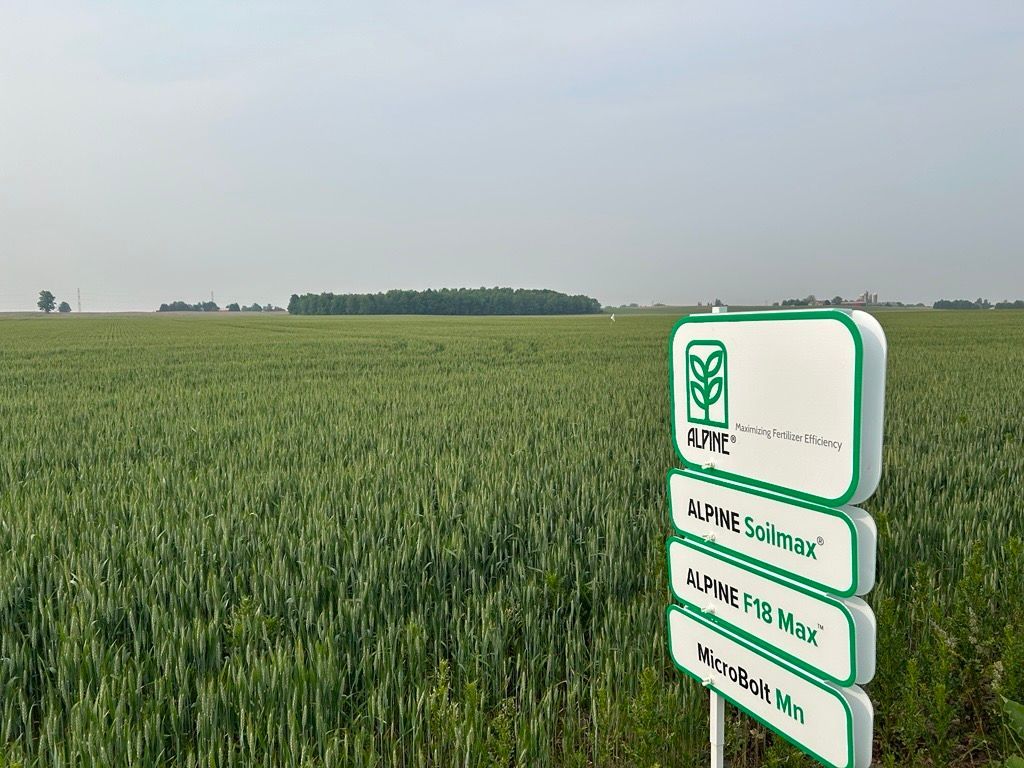
There are so many things in this business that you can learn from time in the field. After more than 50 years planting crops in my area and working land that has been in our family for over 160 years, you develop a perspective that only comes from seeing cycles, challenges, and progress repeat themselves over generations.
Through all those years, one thing has remained constant: the need to keep improving. Farming doesn’t stand still, and neither can we. Each season brings new opportunities to refine what we do, especially when it comes to how efficiently our crops use nutrients.
For over 40 years, I’ve worked alongside Alpine, a company built around the idea of “Maximizing Fertilizer Efficiency.” That tagline isn’t just marketing. It’s a principle that has guided how I approach crop nutrition year after year.
Early on, like many growers and agronomists, the focus was straightforward: apply nutrients and expect results. Over time, we realized that success wasn’t about how much we applied, it was about how much the crop could take up. That shift in thinking has become a driver with growers that are looking to better understand the efficiency of our applied fertility.
Improving nutrient use efficiency started with the basics, phosphorus (P) and potassium (K). These nutrients are essential, but they can also become tied up in the soil if not managed properly. Through better placement, timing, and product selection we’ve been able to improve availability and uptake. Over the years, I’ve seen soils become more productive and more consistent. Not because we dramatically increased rates, but because we became smarter about how we applied them.
That foundation set the stage for the next big challenge. Nitrogen is the engine of crop growth, but it’s also the most vulnerable nutrient. Losses through volatilization, leaching, and denitrification can quickly reduce efficiency and profitability. In my experience, simply applying nitrogen isn’t enough anymore. The real question is: How do we help the plant use every pound more effectively?
That’s where our focus has shifted. Toward managing nitrogen within a complete system, rather than as a standalone input. Over time, we’ve incorporated several key components that have made a measurable difference in how crops utilize nitrogen.
Sulfur: Creating Balance
Sulfur (S) plays a critical role in protein synthesis and works hand-in-hand with nitrogen (N). When the balance between N and S is right, crops respond more efficiently. I’ve seen firsthand how adding sulfur improves plant vigor and nitrogen utilization.
Humic Acids: Supporting the Soil-Plant System
Humic acids have helped us unlock more from the soil. By improving nutrient availability and stimulating soil biology, they support stronger root systems and better nutrient exchange. Healthier roots mean better uptake and that’s where efficiency begins.
Bio-K Technology: Driving Plant Processes
Alpine’s Bio-K technology has been another valuable tool in our system. It supports plant metabolism and nutrient movement within the plant. When crops are functioning efficiently internally, they make better use of what we apply externally.
One of the biggest advancements I’ve seen in recent years is the growing understanding of micronutrients. We’re no longer just correcting deficiencies; we’re using these nutrients to enhance overall system performance.
Two that have stood out in our programs are:
- Boron, which plays a key role in nutrient movement and reproductive development
- Molybdenum, which is essential for nitrogen metabolism within the plant
When these micronutrients are in place, the crops are better equipped to take in and utilize nitrogen. It’s a synergistic relationship; everything works better together.
What we’ve learned over the decades is that no single product or nutrient is the answer. Success comes from putting the pieces together.
Today, we approach fertility as a system:
- Macronutrients (N, P, K)
- Secondary nutrients like sulfur
- Micronutrients such as boron and molybdenum
- Biological and soil-enhancing components like humic and fulvic acids
- Advanced technologies like Bio-K
Each part plays a role, and when they’re aligned properly, the results speak for themselves Even after five decades, I can honestly say we’re still learning. New products, new technologies, and a better understanding of plant and soil interactions continue to push us forward. That’s something I’m committed to continuing, both in my own fields and in the work, I do with others.
Farming is built on tradition, but it thrives on innovation. Being part of a farm with over 160 years of history gives you an appreciation for where we’ve come from, but it also drives you to improve for the future.