Katie Easter • April 12, 2023

AgroFocus Blog Series
Ground Truth

With the warming sun of spring comes the budding of new life as it unfolds across our Canadian landscape. How quickly do snow-covered alfalfa, winter wheat, canola, and rye crops pick up where they left off in the fall? If you take one glance and then look away, you will miss the wonderment that is taking place before your eyes.

A passion for soils and plants can only be appreciated with mud on your boots as you ground truth your fields. The mystery beneath the crop is full of secrets yet valuable information to assist with tremendous crop success. With shovel in hand, it is time to evaluate plant and soil health, supporting and verifying your cropping plans.

With this first blog comes a challenge: better understanding the difference between applying fertilizer or balancing fertility needs for the crop. Are we estimating yields and using removal rates, or are we monitoring our crop progression and strategically managing fertility to enhance crop growth? What strategy do we have with only a few opportunities to influence these crops?

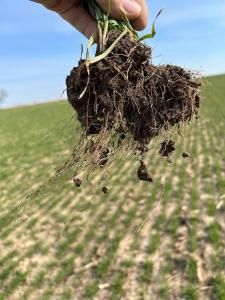
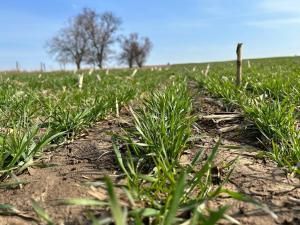
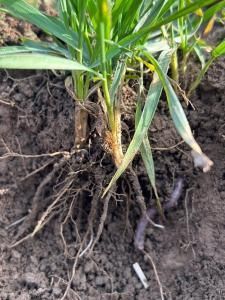
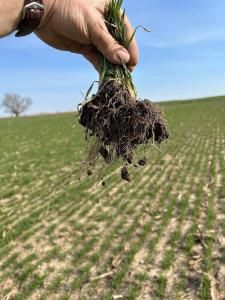
The photos that accompany this blog were taken on April 10 th , walking across this winter wheat field, investigating a benchmark for how we can amplify this crop’s success. With different ALPINE fall fertility programs and micronutrient applications, I want to gain knowledge for this crop and future years. One can better understand how the fall fertility decisions have paid off by retrieving plants and roots.

As this is just one snapshot, I look forward to sharing more information on how ALPINE Bio-K can make a difference. From root scans measuring root tips to tissue analysis monitoring nutrient balance and an opportunity to measure microbial activity.

Understanding that we can only manage what we can measure, what actions have you taken or planned to take this month? Have you walked your fields, measured the temperature, dug up some roots, and even washed them off? Does the color of your crops look the same on your knees as it does driving by, and is the plant stands as even as expected?

These are all learning experiences that ground truth will provide to build your knowledge for more informed decisions. Please take a walk, and see that plants and roots have a story to tell and will respond to your attention to detail. And in my next blog, I will reveal some root scan results and measuring tips for your success as we Maximize Fertilizer Efficiency together.


-Steve McQueen, Agronomy Manager

ad
By SMcQueen June 1, 2026
By Steve McQueen, Agronomy Manager, Nachurs Alpine Solutions.
Balancing Nutrient Efficiency
By Steve McQueen April 2, 2026
When costs tighten, fertilizer decisions often shift toward reducing spend instead of protecting nutrient efficiency.
May 13, 2025
What importance does potassium and sulfur have on the plant?
March 3, 2025
The Crucial Role of Boron in Plants
By emily.bookless February 6, 2025
February 6, 2025 
September 18, 2024
The benefits of maximizing potassium efficiency
August 20, 2024
The benefits of Zinc on Winter Wheat
July 9, 2024
As I travel across Canada, it has been great to see moisture along much of my path. Greener pastures and ditches in Alberta, lush spring wheat, durum, and lentil crops in Saskatchewan, as well as many triticale, grass, and alfalfa fields, are being cut from British Columbia to Nova Scotia. I do not want to forget those potatoes spread across our country along with many specialty crops. As heat and moisture have brought germination, emergence, and vegetation growth, our crop nutrient management remains a key to success as we monitor the “Points of Influence.” Crop scouting, accompanied by tissue or sap samples, supports crop-based crop protection and foliar nutrient applications. As we have been programmed to concentrate on nitrogen, we are putting a lot of pressure on one nutrient to solve many deficiencies and concerns while ignoring the balance of fertility our crops may be looking for. In this blog post, I will not cover all the nutrient requirements but concentrate a little on magnesium, as I refer to what makes plants green. This spring, a significant amount of discussion surfaced around magnesium, and several growers requested magnesium for their cropping plans. Sometimes, what is new is old; looking back, magnesium has been a big part of many crop plans for decades. In sandy soils, specialty crops, and our high calcitic soils, we are looking to balance our oxygen and moisture space in soil levels. To better understand what we are looking at, I have included a list of what Mg is responsible for as well as soil activity stated: Magnesium Crops require magnesium to capture the sun's energy for growth and production through photosynthesis. Magnesium is an essential component of the chlorophyll molecule, with each molecule containing 6.7 percent magnesium. Magnesium also acts as a phosphorus carrier in plants. Necessary for cell division and protein formation. Phosphorus uptake could not occur without magnesium, and vice versa. Magnesium is essential for phosphate metabolism, plant respiration, and the activation of several enzyme systems.