AgroFocus Blog Series
ALPINE Bio-K Enhanced Feed Quality
As I continue to harvest knowledge from our past experiences, I thought it would be interesting to discuss how a well-managed crop plan can also reap rewards in the barn. As we interchange the words fertilizer and nutrition when discussing plants, we stick with nutrition for livestock, as fertility has a different role to play. Yet, fertility in plant reproduction, as well as livestock production, expresses the best results in nutritional health.
Sitting here on my flight to the PEI Potato Expo, I have just finalized my presentation for a group of dairy producers in New Brunswick. It is one of the best parts of being an Agronomy Manager, always considering how interactions within a plant can enhance success while amplifying quality for yield and feed. To that end, I would like to consider “Points of Influences” that we can manage throughout the season, discussed in Blog #13, again.
Germination and emergence are the first “Points of Influence” that we can manage. We understand the importance of setting up our crop for success, but how can this disrupt our feed? As we have witnessed the variation in yield and maturity of later emerging plants, they never recover, increasing crop disease along with grain immaturity at harvest. If we have a 5% variation, we begin to change the uniformity of feed quality.
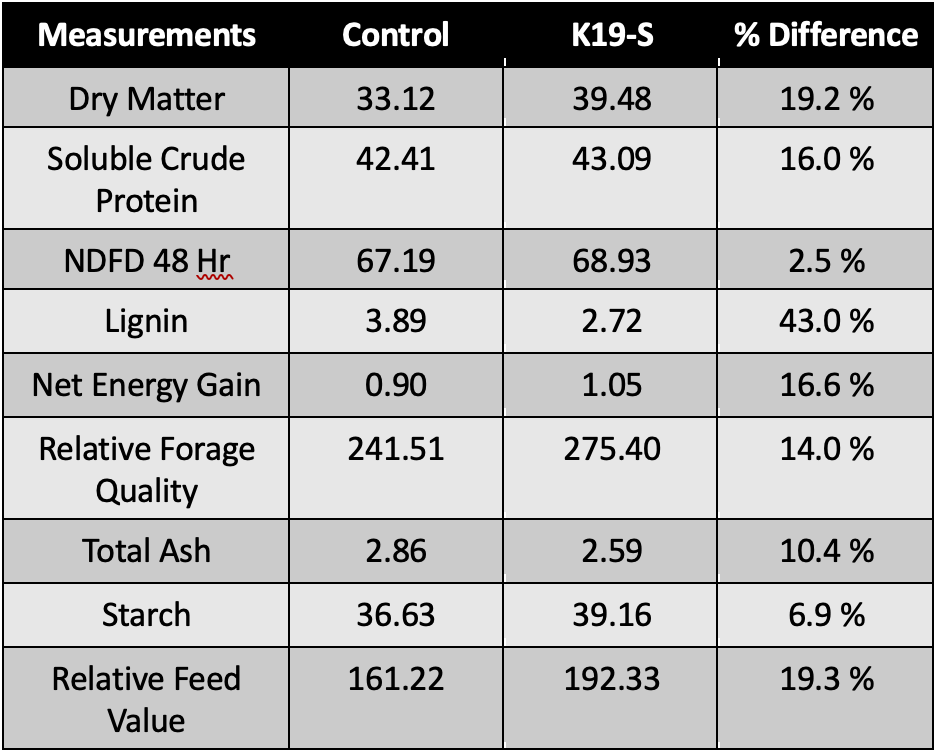
With our crop uniformly emerging, we have begun the race to harvest. As we rely on sunlight for photosynthesis, the sooner we can meet row closure with healthy vegetation, the sooner we can capture maximum solar power. The vegetation also requires a nutrient balance for consistent growth; although we all understand the importance of nitrogen, it must be accompanied by a facilitator, which is potassium. During this stage, we rely on potassium alongside boron to deliver fertility to the plant while returning nutrients back to the roots and microbial life awaiting instructions in the soil. During this growth stage, ALPINE Bio-K provides both an available potassium source and the ability to amplify your plant’s metabolic system. Microbes also take advantage of an increased food source to assist in farming more plant-required nutrients from your soil. (Steve McQueen Blog #13) The importance of maintaining nutritional health in your crops is again reflected in your feed values. As plants become deficient, they begin to cannibalize nutrients, and as they do, the lower portions of the plants decrease in nutrition and digestibility. This breakdown can lead to a higher non-digestible ash number.
By maintaining healthy vegetation, we support the reproduction stage, which is critical for grain yield success. When we are flowering, pollinating, and establishing yield, we are also encountering the heat of summer. Stress mediation is something that our crops are looking for us to support them through, and our ALPINE Bio-K Potassium Source plays a key role in water management. This is where we can take advantage of matching foliar nutrients to maintain crop demands. Understanding plant requirements vs true availability will allow us to manage plant stress more effectively. Foliar applications throughout reproductive stages will allow plants to amplify their genetic potential, leading to feed quality and yield. (Steve McQueen Blog #13)
The final stage allows us to complete the cycle, from seed to germination, from germination to vegetation, and healthy vegetation, leading to strong reproduction. The plant can now fulfill the reason it exists by developing more seed and feed quality from our crop plan. The energy and nutrients we have developed in our crops can now express themselves to seed and feed quality.
By starting our season off with a strategic crop plan, we begin the quest for the “Pursuit of Efficiency.” To assist you with your pursuit, our Nachurs Alpine Solutions Team looks forward to using our 50 years of experience to expand your horizons for your 2024 cropping plan. Over the next few months, as you consider your past experiences, utilize them to enhance your future success.
Please connect with our DSM and Dealer network to see how ALPINE’s Maximize Fertilizer Efficiency can improve your farming operation, along with your feed quality.
-Steve McQueen, Agronomy Manager