
Reallocation Strategy
Same budget. Smarter timing.
What is Reallocation?
The redistribution of fertilizer inputs from less effective sources to more efficient sources positioned where the crop system can better use the nutrient.
Traditional
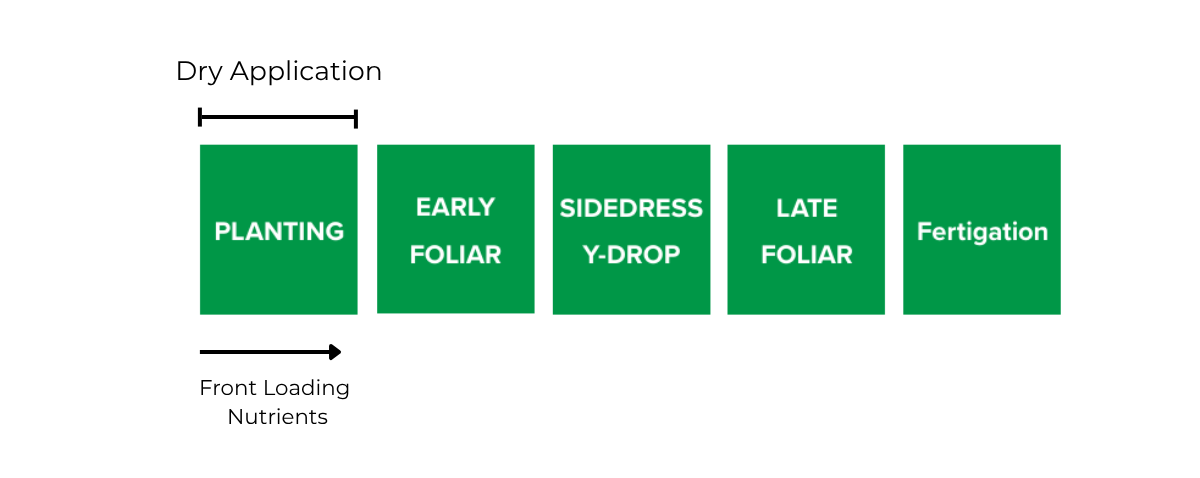
Reallocated
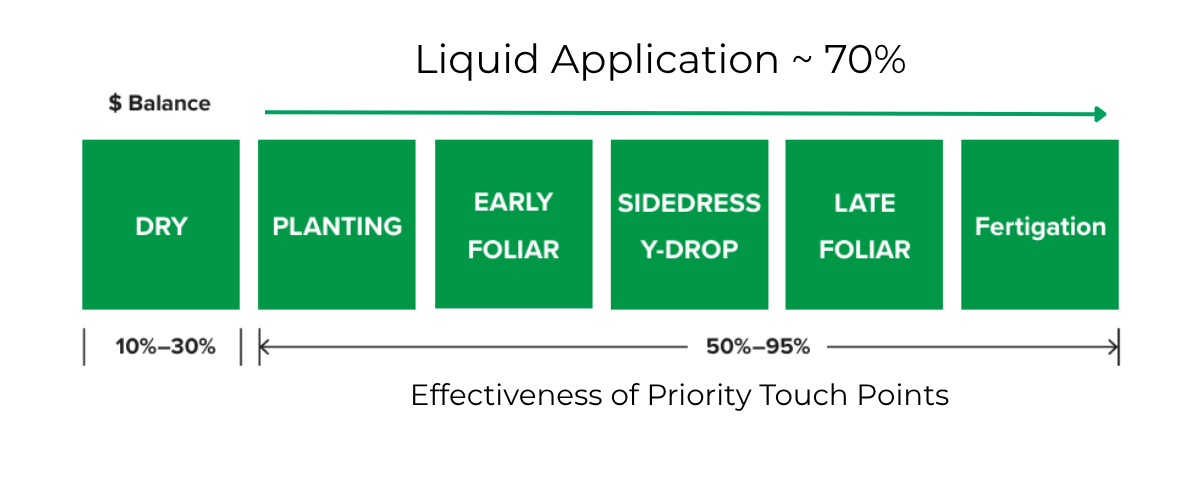
Reallocation Process
Identify crop, yield goal, & nutrient requirements
Start by researching the realistic yield potential based on field history, soil productivity, and management level.
From there, break down what we have to work with in our soils and where our challenges reside!
Calculate nutrient requirements, both macro and micronutrients, (e.g., understand dollars per acre) so you have a clear starting point.
Review inventory of equipment
Existing equipment we have to work with. Upgrades or changes we would like to consider.
Consider the right products and application options
Look at what's currently being applied for products, rates, timing, and placement (broadcast, banded, fertigation, foliar, etc.).
Cross-reference this with the equipment available (spreaders, sprayers, planters with starter attachments, etc.) since equipment capability often limits what changes are practical without additional investment.
Identify what applications could provide for a greater return on investment.
Based on the gap between current practices and the crop's actual needs (from steps 1–2), identify opportunities such as:
- Adding a starter fertilizer at planting
- Splitting N applications for better efficiency and reduced loss
- Adding secondary nutrients (S, Ca, Mg) or micronutrients if soil tests show deficiencies
- Incorporating foliar feeding during key growth stages
Create the reallocation plan
a. This is where you take the total nutrient budget (not necessarily increasing overall spend) and redistribute it more efficiently across the season. Rather than just adding new products on top of the existing program, reallocation means shifting dollars/pounds of nutrient from where they're being under-utilized to where they'll have greater agronomic or economic impact.
b. Building the revised plan with placeholders for each pass – lay out a season-long map (pre-plant, at-planting, in-season, post-harvest) showing which nutrients are applied when, at what rate, and why, referencing back to the soil test and yield goal.
c.*Economic check – run the reallocated plan against current fertilizer prices to confirm its cost-neutral or shows a favorable return relative to the original program, since reallocation is often sold as smarter spending rather than more spending.*
d. The result should be a clear, season-long plan that shows the grower exactly what changed from the previous program, why (tied back to soil test data and yield goals), and what economic or agronomic benefit to expect.
Work with your local sales rep to help build your plan!
Smaller, better-timed applications mean less salt load, better soil biology, and nutrients that are actually available when the plant needs them.
Not sure where to start? The Start2Finish program maps the right ALPINE product to every pass and growth stage.
Talk to your ALPINE rep about building a reallocated fertility plan.