AgroFocus Blog Series

ALPINE G241-S
In keeping with my passion for soils and plants and a few of the challenges from the first ALPINE Blog, I felt compelled to continue with balanced fertility as we discuss the features and strengths of ALPINE G241-S. Introduced several seasons ago, ALPINE G241-S brings so many attributes to your starter program, developing a quick and uniform start and enhancing our yield potential at that first point of influence, germination .
To differentiate ALPINE G241-S and create a stronger understanding of its value, one must consider how it meets so many requirements for your seeds. First, we know that plants can only take up nutrients that are in solution. Next, we understand that plants use phosphate in the form of orthophosphate. We also know the importance of increased microbial activity to enhance germination and convert nutrients in the soil to plant-available forms. From a balanced fertility standpoint, there is greater phosphorous efficiency when N, P, and K are accompanied in a blend, and a lower seed-safe salt index would be beneficial.
Now, if your seed had a chance to order a starter program, why would ALPINE G241-S be an obvious choice? For starters, ALPINE G241-S is a balanced N-P-K liquid starter, filling the solubility requirement very well. Secondly, it is 80% orthophosphate, available immediately for plant uptake. With a neutral pH and a low salt index, it can be placed in-furrow with the seed, increasing early root interception, key for phosphorous uptake. Having a sulfur component to synergize the effectiveness of the balanced nutrients strongly positions ALPINE G241-S in the marketplace. BUT the key to differentiation is in the “K”!!
The potassium source that powers ALPINE G241-S is our ALPINE Bio-K, potassium acetate. This patented form of potassium sets a new standard in plant available “K.” It is the most soluble form of potassium, with a very low salt index. Having a small molecular structure amplifies plant uptake, creating maximum fertilizer efficiency. Along with this potassium source is the acetate component, which develops an abundance of plant and soil synergies for greater success. As a quick overview, upon immediate uptake by the seedlings, plant cells quickly respond to the acetate, increasing the metabolism to increase nutrient uptake and efficiencies. The ALPINE Bio-K is also a food source for microbials and will assist with increasing microbial activity. And with this increased activity and early germination and root growth, we can take advantage of your total crop plan, whether it be broadcasted, strip-till, or 2×2 dry, as well as manure and compost applications. Our true goal is to set up your crop for greater success, Maximizing Fertilizer Efficiency from Start2Finish .
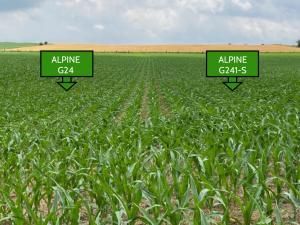
To include some learning experiences, I have added ground truth photos, including roots prepared for scan images I promised. Please look; I will further discuss our ALPINE Bio-K and root scan results in our continuing blogs.
-Steve McQueen, Agronomy Manager