AgroFocus Blog Series
Cations K & Mg
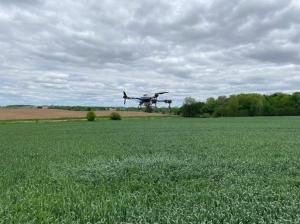
As spring seeding begins across Canada in many areas, I have been walking alfalfa and winter wheat fields, gaining knowledge and experience as they progress. Continuing my passion for soils and plants, I am sampling soil for fertility and microbiology activity while gathering plant tissues and SAP analysis to benchmark how efficiently our crop plan is utilized. It is also essential to know that every test I will be looking at will be affected by Cations.
As we look at Cations K, Mg, Ca, H, Na, and NH4, we need to understand their interactions and how they affect soil structure, pH, microbial activity, and plant nutrient efficiencies and growth. Plants and microbial survival are the same for you and me, first needing oxygen, second water, and then food and shelter. With Ca maintaining oxygen and Mg water, a balance is required. Hence, maintaining balanced fertility throughout the year is critical to our success. This is something too grand to cover in a blog, but we can at least consider a few talking points and address some of the questions I have been asked.
My last blog discussed the potassium source that powers our ALPINE G241-S and ALPINE Bio-K! This patented form of potassium acetate sets a new standard in plant available “K,” As I look across numerous tissue and soil samples, “K” deficiency continues to bubble up. With potassium playing a massive role in nutrient and water management within our plants, we must pay close attention to maintaining K levels. Starting with planting and a second application of nitrogen to winter wheat or with your initial application on all crops, it is an excellent time to include potassium to enhance nutrient efficiency.
With ALPINE having over 50 years of liquid phosphorous expertise, we have expanded our potassium offering, developing ALPINE K19-S to meet many of the application opportunities we mentioned. Applying balanced nutrition at each point of influence, ALPINE K19-S shows its flexibility in many ways. Across Western Canada, a blend of ALPINE G22 + ALPINE K19-S allows Growers an in-furrow option for potassium management. When blending with UAN and UAN + ATS, ALPINE K19-S enhances nitrogen use efficiency, increasing nitrogen uptake. Whether nitrogen is streamed, side-dressed, or y-dropped, this is an ideal time to balance N, K, S, and even Boron, per your soil and tissue requirements. It is also an excellent opportunity to look at your Mg levels, as it is responsible for nitrogen management and the center of chlorophyll.
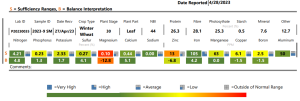
Having looked at several soil and tissue samples this week, we have addressed some fields by including ALPINE MicroBolt Mg with nitrogen applications. As we gather more information, I will share it in future Blogs. I have also attached a few tissue samples taken this week to show where the numbers are at. In 2022, I foliar applied ALPINE MicroBolt Mg and ALPINE K20-S with a drone to experiment with efficacy and will expand this application over the next two weeks. With our true goal being to set up your crop for tremendous success, Maximizing Fertilizer Efficiency from Start2Finish will continue to be emphasized.
To continue our learning experiences, I have added tissue samples representing plots we will continue sharing information from throughout the year. Trust you have a fabulous May, and looking forward to gaining knowledge together.
-Steve McQueen, Agronomy Manager
Click on the images to view them.